
Cyber threats are no longer limited to data breaches or malware attacks. Enterprises face growing risks from ransomware, cloud vulnerabilities, identity theft, supply chain attacks, and increasingly sophisticated cybercriminals. Managing these risks requires more than individual security tools. Organizations need a structured approach that connects cybersecurity practices with business objectives.
A cybersecurity framework provides that structure. It helps organizations identify risks, implement appropriate security controls, respond to incidents, and continuously improve their security posture. For enterprise security leaders, choosing and implementing the right framework is an important step toward building a resilient business.
What Is a Cybersecurity Framework?
A cybersecurity framework is a structured set of guidelines, practices, and recommendations that organizations use to manage cybersecurity risks. It establishes a consistent approach to protecting digital assets, sensitive information, networks, applications, and business operations.
Rather than prescribing a single security solution, a framework helps organizations understand their current security posture, identify gaps, prioritize improvements, and measure progress.
Popular frameworks include the NIST Cybersecurity Framework (CSF), ISO/IEC 27001, and the CIS Critical Security Controls. Each offers a different approach, depending on an organization’s size, industry, regulatory requirements, and security objectives.
Why Do Enterprises Need a Cybersecurity Framework?
As enterprises expand their digital operations, their attack surfaces grow. Cloud adoption, remote work, third-party integrations, and interconnected systems introduce new vulnerabilities that can be difficult to manage without a consistent strategy.
Implementing a cybersecurity framework helps organizations:
- Identify and prioritize cybersecurity risks.
- Establish consistent security policies and controls.
- Improve incident detection and response.
- Support regulatory compliance and audit readiness.
- Strengthen accountability across teams.
- Align cybersecurity investments with business priorities.
A framework also helps leadership understand cybersecurity in business terms, making it easier to evaluate risks and allocate resources effectively.
Popular Cybersecurity Frameworks Enterprises Should Know
Choosing the right framework depends on the organization’s operational requirements and risk profile.
1. NIST Cybersecurity Framework
Developed by the US National Institute of Standards and Technology, the NIST Cybersecurity Framework 2.0 provides guidance for managing cybersecurity risks across organizations of different sizes and industries.
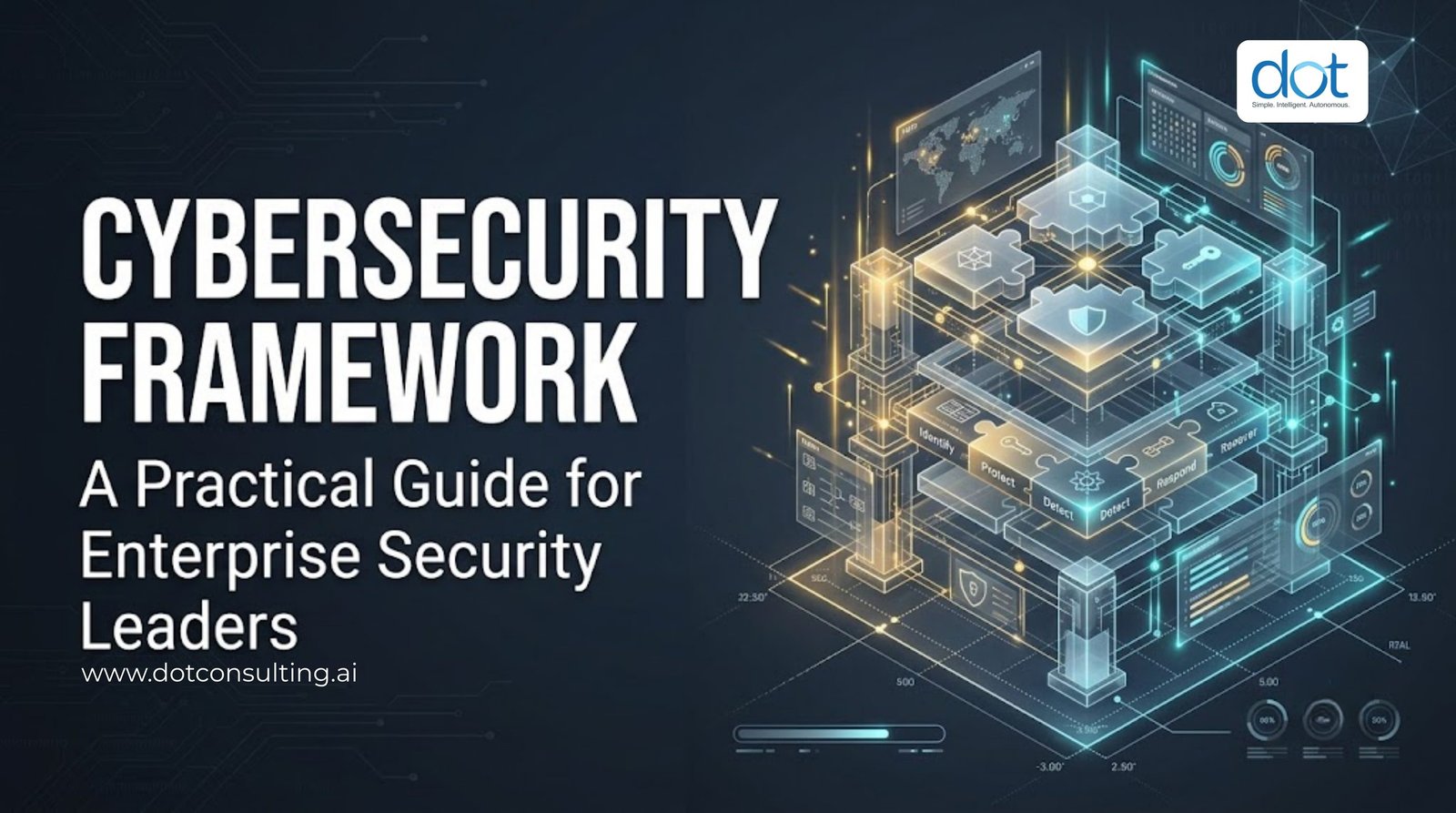
Its six core functions are Govern, Identify, Protect, Detect, Respond, and Recover.
These functions help organizations establish accountability, understand their assets and risks, implement safeguards, detect threats, manage incidents, and restore operations after disruptions.
NIST CSF 2.0 is particularly useful for enterprises seeking a flexible, risk-based approach to cybersecurity.
2. ISO/IEC 27001
ISO/IEC 27001 is an international standard for establishing, implementing, maintaining, and continually improving an Information Security Management System (ISMS).
It takes a systematic approach to managing information security risks through policies, processes, controls, and ongoing evaluation.
Organizations pursuing formal certification can use ISO/IEC 27001 to demonstrate that their information security management system meets the standard’s requirements.
3. CIS Critical Security Controls
The CIS Critical Security Controls provide prioritized safeguards that organizations can implement to defend against common cyber threats.
They cover areas such as asset management, access control, vulnerability management, secure configuration, audit logging, and incident response.
These controls can be especially useful for organizations looking for practical security improvements and a prioritized implementation roadmap.
How to Implement a Cybersecurity Framework
Selecting a framework is only the first step. Successful implementation requires planning, ownership, and continuous evaluation.
Step 1: Assess Your Current Security Posture
Begin by evaluating existing security policies, technologies, processes, and controls. Identify critical assets, sensitive data, regulatory obligations, and potential vulnerabilities.
A gap assessment helps determine where current practices fall short of the chosen framework’s requirements.
Step 2: Identify and Prioritize Risks
Not every cybersecurity risk requires the same level of attention. Evaluate risks based on their likelihood, potential business impact, and the criticality of affected systems.
Prioritize threats that could disrupt essential operations, expose sensitive information, or create significant financial and reputational damage.
Step 3: Define Security Policies and Controls
Establish clear policies for access management, data protection, vulnerability management, incident response, employee awareness, and third-party security.
Select controls based on identified risks rather than implementing every available security measure without considering its business value.
Step 4: Assign Responsibilities
Cybersecurity is not exclusively an IT responsibility. Leadership, security teams, legal departments, compliance professionals, employees, and external vendors all have roles to play.
Define ownership for security decisions, risk acceptance, incident escalation, and compliance reporting.
Step 5: Monitor, Test, and Improve
Cyber risks change as technologies, business operations, and attack methods evolve. Regular vulnerability assessments, security testing, incident simulations, audits, and performance reviews help identify weaknesses.
Continuous monitoring also allows organizations to detect suspicious activity and respond to emerging threats more effectively.
Common Challenges in Framework Implementation
Enterprises may encounter challenges such as limited budgets, skills shortages, complex legacy systems, unclear ownership, and resistance to organizational change.
Another common mistake is treating framework implementation as a one-time compliance exercise. Documentation alone cannot protect an organization if security controls are poorly implemented or rarely tested.
To overcome these challenges, enterprises should adopt a phased implementation plan, assign clear responsibilities, prioritize high-impact risks, and regularly evaluate control effectiveness.
How Cybersecurity Consulting Services Can Help
Implementing a cybersecurity framework requires technical expertise, risk assessment capabilities, and an understanding of business requirements. Organizations may benefit from external specialists when internal resources are limited or when an independent assessment is needed.
Cybersecurity consultants can help evaluate existing controls, identify security gaps, recommend suitable frameworks, develop implementation roadmaps, and strengthen incident response processes.
They can also support governance improvements, compliance readiness, third-party risk assessments, and continuous security monitoring.
The goal is to establish a practical, sustainable security program that reduces risk while supporting business growth.
Conclusion
A well-implemented cybersecurity framework gives enterprises a structured way to manage cyber risks, strengthen security controls, and improve organizational resilience. By selecting an appropriate framework, assessing risks, defining responsibilities, and continuously monitoring performance, organizations can move beyond reactive security practices.
For enterprise leaders, the priority should be to treat cybersecurity as an ongoing business function rather than a one-time technical project. A proactive, risk-based approach helps protect critical assets, maintain stakeholder trust, and prepare the organization for evolving threats.
Frequently Asked Questions
1. What is the purpose of a cybersecurity framework?
Its purpose is to provide structured guidance for identifying, assessing, managing, and monitoring cybersecurity risks while improving an organization’s overall security posture.
2. Which cybersecurity framework is best for enterprises?
The right choice depends on business objectives and requirements. NIST CSF offers flexible risk management guidance, ISO/IEC 27001 supports an information security management system, and CIS Controls provide prioritized technical safeguards.
3. Is a cybersecurity framework mandatory?
Not universally. However, specific industries, contracts, regulations, or customer requirements may make particular standards or controls necessary.
4. How often should a cybersecurity framework be reviewed?
Organizations should review their security practices regularly and reassess them whenever significant changes occur in technology, business operations, regulations, or the threat landscape.
5. Can small and medium-sized businesses use cybersecurity frameworks?
Yes. Frameworks can be adapted to an organization’s size, resources, risk exposure, and operational complexity. Businesses can begin with essential controls and expand their security programs over time.
Add a Comment